AVPN Global Conference 2023 | 20 - 22 June 2023

Days
Hrs
Mins
Secs

Strengthening Health System for Better Maternal and Child Nutrition in Lao PDR

Save the Children

Gap

Child wasting in Lao PDR remains a critical public health challenge, with prevalence increasing from 5% to 11% over the past 14 years, exceeding the national and global target of reducing wasting to below 5% (LSIS-3, 2023). The burden is highly inequitable: three provinces have wasting prevalence above 15% and five exceed 10%. Children from poorer households, ethnic minority communities, younger children, particularly those aged 12–17 months, and children of mothers with lower levels of education are disproportionately affected. Poor maternal, infant and young child nutrition (MIYCN) practices are major underlying drivers. Only 50.3% of infants under six months are exclusively breastfed, 44.9% of newborns are breastfed within one hour of birth, and only 40.6% of children aged 6–23 months meet minimum dietary diversity. Food insecurity, limited dietary diversity, cultural feeding practices and ethno-linguistic barriers further constrain effective social and behaviour change communication. Access to quality prevention, early detection and treatment is also limited. Only around 33% of health centres provide Integrated Management of Acute Malnutrition (IMAM) services, leaving children in remote and hard-to-reach communities at increased risk of delayed detection and mortality. Health systems face gaps in frontline capacity, growth monitoring, essential commodities, supervision, supply chains and data use. The Government of Lao PDR has demonstrated strong commitment through national health and nutrition strategies, including the NPAN 2026–2030, RMNCAH Strategy and programmes covering IYCF, micronutrient supplementation, growth monitoring and wasting treatment. However, a significant gap remains between national policy commitments and effective delivery at community level.

Save the Children is addressing these gaps through health-system strengthening. Philanthropic investment would complement existing financing by expanding community-based prevention, early identification and referral, particularly for vulnerable and underserved families, while strengthening the link between households and quality nutrition services.

Opportunity

Save the Children proposes an integrated first 1,000 days approach that connects maternal and child nutrition support at household and community level with quality, responsive health services, while maintaining access to prevention, screening and treatment of wasting among children under five. The approach will strengthen and work through existing government and community systems to enable scale and sustainability.
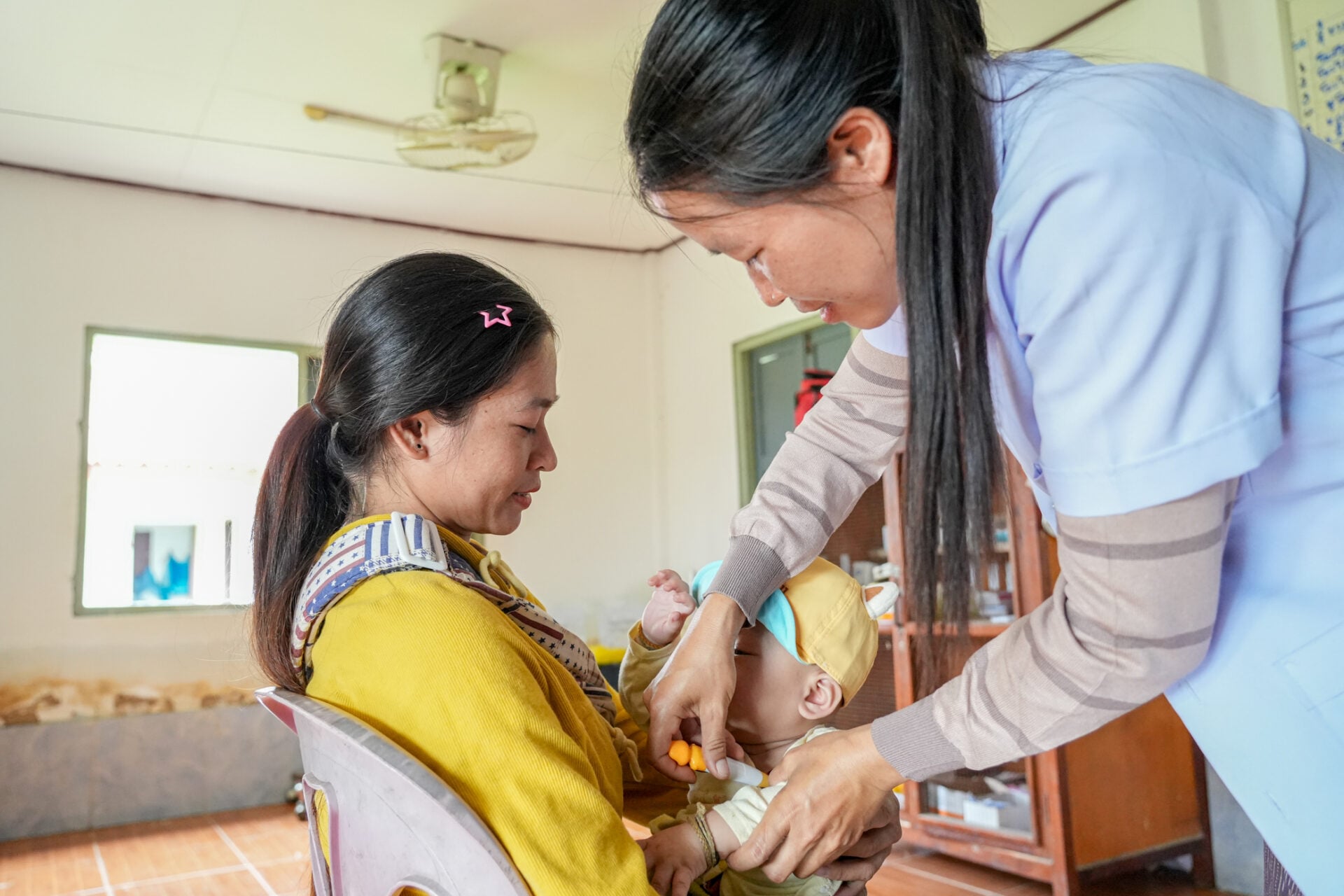
  1. Bring prevention closer to families. Trained Village Health Volunteers will provide targeted home visits and community-based support on maternal nutrition, breastfeeding, complementary feeding and early identification of wasting. Counselling and Social and Behaviour Change Communication will be adapted to local languages, literacy levels and cultural practices, with caregivers and community leaders engaged in designing and delivering messages. Families will be linked to essential maternal and child health and nutrition services.
  2. Strengthen quality and continuity of care. Health workers will receive training, mentoring and supportive supervision, alongside improved access to essential equipment and nutrition commodities. Antenatal nutrition and supplementation, breastfeeding support, growth monitoring, wasting screening, treatment and referral follow-up will be better integrated across facility and outreach services.
  3. Strengthen government-led systems. Provincial and district authorities will lead planning, supervision and performance reviews, using routine health data to identify underserved populations and improve equitable access. Strengthening government systems, rather than creating parallel structures, will support sustainability and scale.
Existing financing from UNICEF and the Green Climate Fund provides an important foundation for nutrition and climate-resilient health-system strengthening. Philanthropic capital would address the remaining community-level gap by enabling additional outreach, household-level prevention, early identification and referral, and targeted coverage in underserved areas, with clear costing, reach and measurable nutrition outcomes Invest in the first 1,000 days. Help close the gap and give every mother and child a healthier start.

Partners

  • Ministry of Health and provincial and district health authorities, health centres, district and provincial hospitals, and Village Health Volunteers.

About the Organisation

Lorem ipsum dolor sit amet, consectetur adipiscing elit. Etiam eu turpis molestie, dictum est a, mattis tellus. Sed dignissim, metus nec fringilla accumsan, risus sem sollicitudin lacus, ut interdum tellus elit sed risus. Maecenas eget condimentum velit, sit amet feugiat lectus. Class aptent taciti sociosqu ad litora torquent per conubia nostra, per inceptos himenaeos.

Frequently Asked Questions

Markets

Lao PDR

Total Investment Need

USD 784,000

Investment Duration

3 years

Express Your Interest
Let's create impact together

This field is for validation purposes and should be left unchanged.

To express your interest in investing in one of the nutrition investment opportunities or to know more about them, please share your details and we will get back to you soon.