

WE ARE SOLDOUT

Days
Hrs
Mins
Secs

Blog

Asian Family Philanthropy’s High-Impact Potential

By

Multiple Authors

Share

Family philanthropy is one of the defining forces shaping the future of giving in Asia as the region’s private wealth continues to grow. Operating without the constraints of institutional or corporate funders, families can use their autonomy to take risks others cannot or will not, coordinate collective action, and mobilise multiple types of capital.

The resources at their command represent much of Asia’s new wealth. Roughly 94% of Asia’s wealthiest families are first or second-generation wealth holders. Approximately 95% of those families retain control of the businesses that generated their wealth.

Against this backdrop, wealthy families are in a strong position to effect long-term change, influence corporate and institutional philanthropy, and reshape the future of giving, concludes High-Impact Family Philanthropy: What Makes Family Giving Distinctive, the third instalment of The Bridgespan Group’s high-impact philanthropy series. The new research describes examples of high-impact giving and seeks to inspire others to use their distinctive autonomy to pursue similar paths.

Taking risks others cannot or will not

Families have the autonomy to move from decision to deployment more readily than institutional or corporate funders, and to take risks others would avoid. In Singapore, for example, the Lien Foundation made a decade-long push into early childhood development, a sector that few had championed when it began.

In 2012, the Foundation “ruffled a few feathers” when it published a study that showed Singapore ranked near the bottom of 45 countries on how well it served its youngest children.

“Preschool was the Cinderella of our education system, neglected compared to her primary and secondary school stepsisters, burdened by poor salaries, low status, and wide disparities in quality,” says Lien Foundation CEO Lee Poh Wah.

Over the next decade, the Foundation initiated a number of pilot programmes to support the developmental needs of young children. Those programmes eventually took root. For example, the government of Singapore adopted a programme to spot and support developmental needs in preschool children, now covering about 60% of Singapore’s preschoolers. By 2021, public investment in the preschool sector grew fivefold to SGD 1.8 billion (~USD 1.4 billion). At that point, the Lien Foundation stepped back to let others continue the work it initiated.

The foundation played a distinctive risk-taking role that family philanthropies are especially well-positioned to play. It named a gap others had been slow to confront, tested practical models before the evidence base was settled, and built each effort for adoption rather than ownership. The result was not a foundation programme made larger, but a public system made stronger.

Facilitating collective action

Families with trusted relationships across sectors can bring together stakeholders who might not otherwise gather, helping fragmented efforts to evolve into coordinated action.

The Azim Premji Foundation’s response to the COVID-19 pandemic is one such example. Azim Premji, founder and chairman of Wipro, a global IT firm, endowed the foundation with a significant portion of his wealth. It is run by a professional staff, but the family continues to guide the mission and strategy as members of the board.

The pandemic prompted the family to draw on complementary capabilities between the foundation and Wipro to mount a coordinated response of INR 2,125 crore (approximately USD 223 million) between March 2020 and June 2021. The foundation contributed field presence, grassroots partnerships, and implementation capacity across more than 100 districts. Wipro contributed logistics, corporate infrastructure, and professional talent. The foundation also drew in some 10,000 government schoolteachers and around 800 other partners.

This collaborative effort reached more than 150 million people, paid for over 10,000 oxygenated beds, and provided 540 million meals reaching some 13 million people. It also supported 8.3 million people with agricultural inputs, such as seeds and fertiliser, and access to welfare entitlements in drought-prone areas. This effort illustrates one way families can make collective action more effective: invest in the institutions and structural ties that allow coordination to translate quickly into action.

Mobilising multiple types of capital

Increasingly, Asian families are exploring how to coordinate their philanthropic capital with their investment portfolios, business assets, relationships, and credibility. By coordinating these assets, a family can extend its reach beyond what grants alone can achieve.

“Philanthropy and wealth accumulation might have occupied separate silos in the past. But today, forward-thinking Asian families view them as a spectrum, blending traditional philanthropy with ESG portfolios and impact-focused funds,” says Rocky Tung, executive director of the Financial Services Development Council in Hong Kong.

Common ownership does not automatically produce a common strategy. A foundation, family office, operating business, and investment portfolio may all sit within the same family system whilst operating under different mandates, incentives, and decision rules. Families that coordinate across them effectively deliberately build the connective tissue.

“Family members coordinate the strategies of the foundation, the family office, and the family business by co-leading multiple boards,” says the head of a Singapore-based family foundation. “We share a lot of deal flow between philanthropy and impact investment; the family office passes opportunities to the foundation when an organisation would benefit more from catalytic capital.”

From good intentions to lasting impact

Family philanthropy is an opportunity to direct what a family has built towards purposes larger than the family itself. The autonomy families have to make choices gives them a structural advantage over other sources of philanthropy. Yet, realising that opportunity is not a given. What distinguishes those who achieve high impact is how deliberately they use that freedom.
References

A. Environmental Stewardship
To protect the environment, we organize programmes like mangrove nursery and Reforestation, Coastal and River Clean-Up, Community Based Environmental Solid Waste Management, Environmental IEC Campaign and Eco-Academy

B. Food Security and Sustainable Livelihood
To ensure a sustainable livelihood for the community, eco-tourism include Buhatan River Cruise Visitor Center Buhatan River Mangrove Boardwalk are run by the community. Others include Organic Vegetable and Root crops Farming, Vegetable and Root crops Chips and by-products Processing and establishing a Zero waste store.

C. Empowered Communities
To empower the community, we provide product and Agri-Enterprise Development Training, Immersion and Learnings Exchange Program, Earth Warrior Training and Community Based Social Entrepreneurship Training

Authors

Xueling Lee

Partner, Southeast Asia

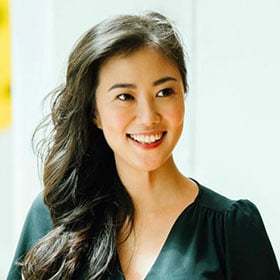
Xueling Lee is a partner in Bridgespan’s Southeast Asia office, based in Singapore.

Xue has worked with philanthropists, foundations, philanthropic intermediaries, as well as nonprofits, on a wide range of issues including strategy, growth, impact measurement, and organizational effectiveness. Xue’s work has spanned multiple domains, focusing on education, early childhood development, and economic empowerment. Most recently, Xue supported a pan-Asia foundation in defining their strategy, including their path to scale, as well as their measurement and learning strategy. She also supported the launch of an Asian philanthropic intermediary, helping them define their strategy and impact measurement framework, as well as source, perform due diligence, and curate a portfolio of high-impact grantees for their members. She has also co-authored publications titled, Promoting Equitable and Inclusive Green Job Growth in Southeast Asia, “The Philanthropic Potential of Asia’s Rising Wealth,” How Asian Philanthropists Work with Governments, and High-Impact Philanthropy: Giving Better Across Asia and the World.

Prior to Bridgespan, Xue led transformation for HEINEKEN across their APAC operations, covering 19 markets. She worked at Bain & Company for almost a decade, where she focused on driving large-scale business and digital transformations for large regional companies as they scale across Asia-Pacific and globally. She also has deep expertise in private equity and M&A, having served institutional and corporate investors on a broad range of topics including fund strategy, commercial due diligence, and portfolio company value creation.

Xueling started her career as a high school economics teacher in Singapore. She also served as the special assistant to the president at the Lincoln Center of the Performing Arts under the Harvard Business School Leadership Fellows program.

Xue holds an MBA from Harvard Business School, an Ed.M from the Harvard Graduate School of Education, and a BSc in Government and Economics (First Class Honors) from the London School of Economics.

Gwendolyn Lim

Partner and Singapore Office Head, Southeast Asia

Gwendolyn Lim is a partner and the head of Bridgespan’s Southeast Asia office, based in Singapore.

She has more than 20 years of consulting experience with Bain & Company spanning South-East Asia, North Asia, and the US. While at Bain, Gwen led the customer practice for more than eight years and was an active member of the retail and financial services teams. She has worked closely with multinational and local clients on topics such as customer transformations, corporate and business-unit strategy, performance turnarounds, and due diligence. Some of her past projects include helping major department stores in SEA to identify, retain, and drive share-of-wallet amongst their most loyal customers, redesigning the customer experience for one of the largest Asian banks around fraud, and articulating the process and playbook around corporate mergers and acquisitions for an industrials conglomerate.

In the social impact space, Gwen has worked with a leading Singaporean university to outline its five-year strategy across academics, research, and entrepreneurship as well as tackling its fundraising and endowment needs. Additionally, she has led a project with a major field-building NGO in the Philippines to identify sectors that would generate the largest number of high-impact entrepreneurs within the next three to five years.

In her personal capacity, Gwen has previously aided the Community Foundation of Singapore to articulate its three-year strategic plan–identifying target donor segments and delineating criteria to identify high-potential charitable organizations.

Gwen earned an MBA from Harvard Business School. She is a graduate of Stanford University, where she received her bachelor’s degree in economics. Gwen is a novice Crossfitter, a slow-but-steady reader of biographies, and an avid fan of all things related to professional sports.

Zhen Liu

Principal, Southeast Asia

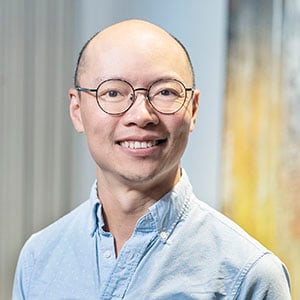
Zhen Liu (刘桢) joined The Bridgespan Group in 2022 and is a principal in the Southeast Asia office, based in Singapore. He has worked with impact capital clients including HNWIs, small family offices, collaboratives, and institutional funders in the US and in Asia. He has advised clients on a range of topics including philanthropy strategy, sourcing and diligence, operating model design and implementation, and program evaluation. Zhen has supported change makers in education providing direct service and building the field. Zhen is passionate about promoting equity and social mobility by improving access and quality of education, public transit, and healthcare.

Prior to Bridgespan, Zhen worked at Washington Metropolitan Area Transit Agency, Bain & Company, City of Atlanta Mayor’s Office, and TechnoServe in Zimbabwe. In these different roles, Zhen worked with local government, non-profit organizations, corporations, higher education institutions, and multi-lateral organizations covering a variety of subjects, including strategy, program management, and performance improvement. During his tenure at Bain, Zhen worked in seven offices, both in Asia (Beijing, Shanghai, Hong Kong, Singapore, and Delhi) and the US, with a focus on Merger & Acquisition, including pre-deal due diligence and post-merger integration.

Zhen graduated from Georgia Institute of Technology with a Bachelor of Science in Electrical Engineering and from Harvard Kenney School with a Master of Public Administration in International Development.

Did you enjoy reading this?

You might also be interested in